
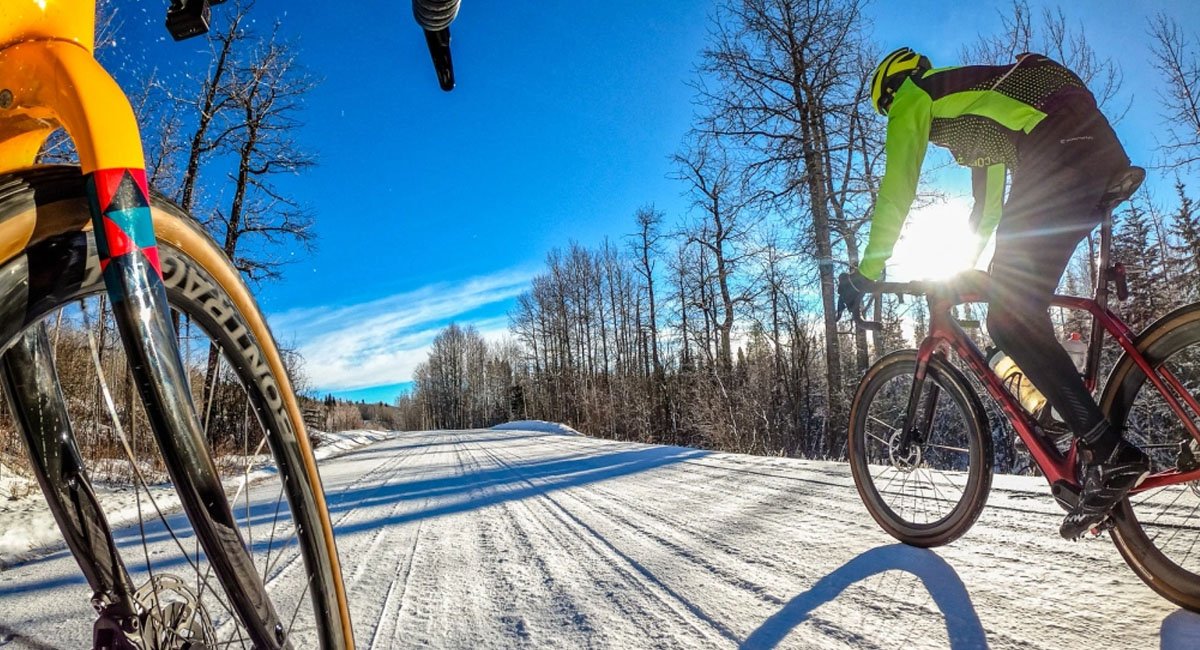
In winter, your bicycle will need special maintenance. To ensure good handling and optimum performance, be sure to perform a full review of your mount and some routine checks during that period.
Think, for example, of acquiring mountain tires or studded tires, perfect for handling and rolling in the snow. Enjoy a better grip—plus, they will withstand the lowest temperatures (-30°C).
Also, plan for deicing fluid for your bicycle, its parts, and accessories, without forgetting the lubricants that will help you avoid many unpleasant surprises. This will reduce the risk of frost or rust.
Surprising, yet true! In winter, it’s better to leave your bike outside when you go or return from work. This will protect it from thermal shock due to sudden changes in temperature. Being subjected to these temperature contrasts, some components of your bike or mechanisms could expand and no longer function properly.
So, remember to protect it, particularly the transmission, with a protective cover. At home, make it a habit to leave your bike in the garage, for example.
In winter, the weather is wet. So why not get yourself a mudguard against mud splashes, water, or snow? They also protect bikes and prevent them from rusting or freezing due to the accumulation of water or snow.
Once your bike is safe, we must do the same for you! Gloves, scarves, and hats are therefore required. Opt for windproof clothing that is breathable, waterproof, and easy to dry. Also, prefer clothing with good thermal insulation and goggles to protect your eyes from the effects of cold and wind while riding.
Before each winter, audits are necessary. First, check the brakes, especially if your journey takes you through icy roads. Make sure they are working properly by doing small braking tests. And, of course, on the road, always exercise caution and vigilance.
In terms of lighting, do the same and make sure all your lights are working. Remember to change the batteries if necessary. On the road in rain, fog, or a snowstorm, your visibility will ensure security for you as well as other road users. Also, do not forget to lubricate your bicycle chain regularly to ensure proper operation, especially when temperatures are low.
Before you start pedaling, remember to warm up. Also, check the pressure of your tires. If you need to ride on snow, reduce the pressure to increase the contact surface. However, be careful not to fall below the minimum pressure indicated on the sidewall of your tire.
Once on the road, do not speed and adopt safe driving habits. Use reflective accessories. Avoid driving in the wake left by cars—this area is even more dangerous.
By following these tips, you’ll find it as enjoyable to ride in winter as in summer!