
Key Takeaways at a Glance
- Starting, Electrical & Charging Problems (#1–#4): Electrical and starting issues top the list of US roadside assistance calls, especially during extreme winter cold and peak summer heat..
- Engine, Cooling & Fuel System Faults (#5–#9): Drivability and temperature faults require prompt diagnosis because heat and unburned fuel can rapidly damage aluminum cylinder heads or catalytic converters..
- Brakes, Tires, Steering & Suspension Issues (#10–#13): Chassis and rolling components affect stopping distance and directional control directly, making sensory clues vital..
- Transmission & Climate Control Issues (#14–#15): Catching drivetrain and HVAC trouble early keeps minor seal or fluid fixes from escalating into full assembly replacements..
Most expensive automotive breakdowns begin as subtle, easily recognizable symptoms—a faint squeak when stopping, a slight hesitation merging onto the interstate, a damp spot beneath the bumper, or a dashboard light that flickers once and returns a week later. Knowing how to interpret what your vehicle is communicating helps you decide whether you can drive safely to a repair shop or need to pull over immediately.
Across millions of US passenger vehicles, the same fifteen mechanical, electrical, and wear-related issues account for the vast majority of service visits. Below is a clear, symptom-first breakdown of each problem, how to identify it reliably, and what action to take next.
Starting, Electrical & Charging Problems (#1–#4)
Electrical and starting issues top the list of US roadside assistance calls, especially during extreme winter cold and peak summer heat.
1. Weak or Failing 12V Car Battery
Symptoms include sluggish engine cranking, dim interior lights before startup, rapid clicking when turning the key, or electronics resetting overnight. Batteries typically last 3 to 5 years; a quick conductance test confirms remaining Cold Cranking Amps.
2. Failing Alternator
Unlike a dead battery that fails before the engine starts, a failing alternator causes the red battery warning icon to light up while driving, headlights to brighten and dim with RPM, or the vehicle to stall minutes after a jump-start because the charging system is no longer supplying ~14 volts.
3. Worn Starter Motor or Solenoid
When your dashboard lights and headlights shine brightly at full strength, yet turning the key produces only a single loud metallic click or silence, the starter motor, solenoid, or starter relay is a prime suspect.
4. Corroded Battery Terminals & Poor Grounds
Chalky white or greenish buildup around battery clamps creates high resistance, triggering intermittent no-start mornings even when the battery itself is healthy.
Engine, Cooling & Fuel System Faults (#5–#9)
Drivability and temperature faults require prompt diagnosis because heat and unburned fuel can rapidly damage aluminum cylinder heads or catalytic converters.
5. Illuminated Check Engine Light & Sensor Faults
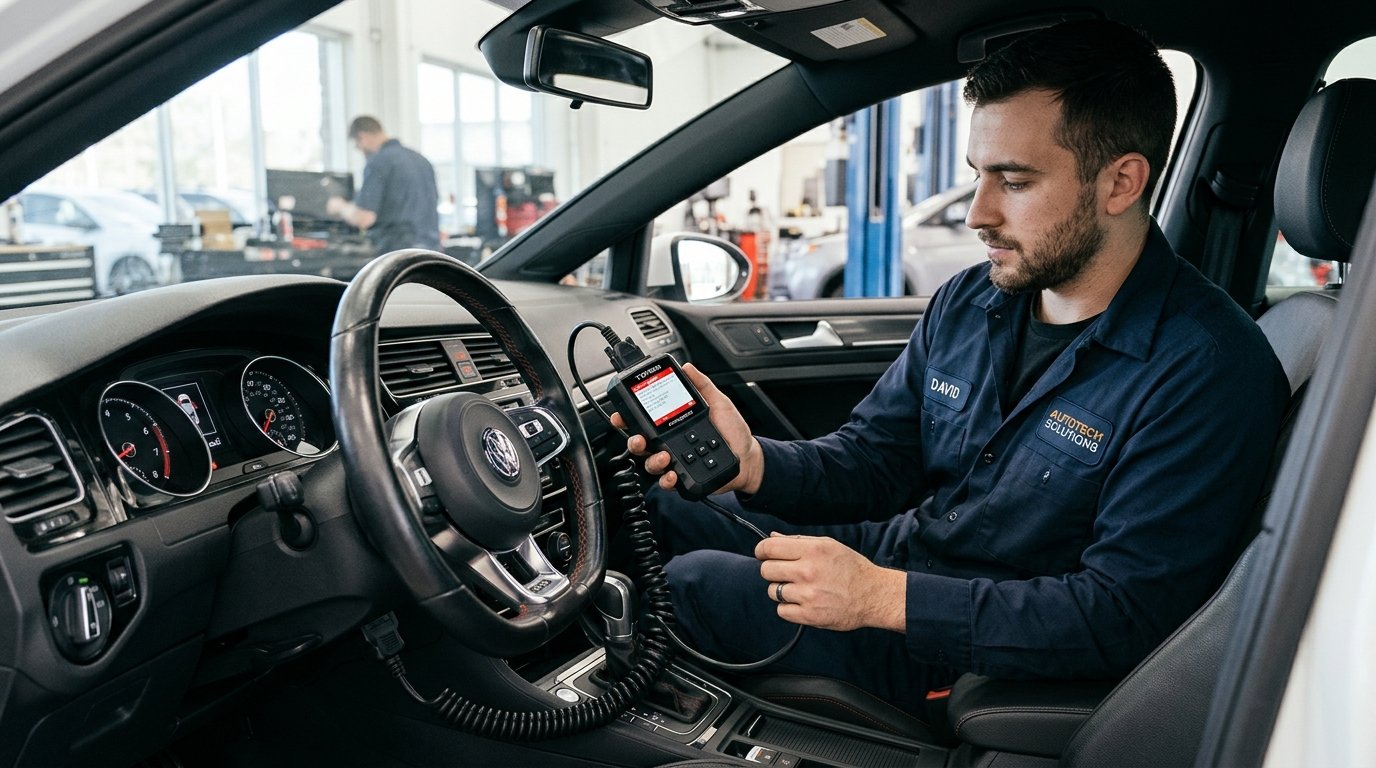
A steady amber Check Engine Light frequently points to an evaporative emissions leak (loose gas cap), sluggish oxygen sensor, dirty mass airflow sensor, or thermostat stuck open. A flashing light indicates an active severe misfire—pull over promptly.
6. Engine Misfires (Worn Spark Plugs or Ignition Coils)
Noticeable shaking at idle, stumbling under acceleration, reduced gas mileage, and P0300–P0308 OBD-II codes signal incomplete combustion in one or more cylinders.
7. Engine Overheating & Coolant Leaks
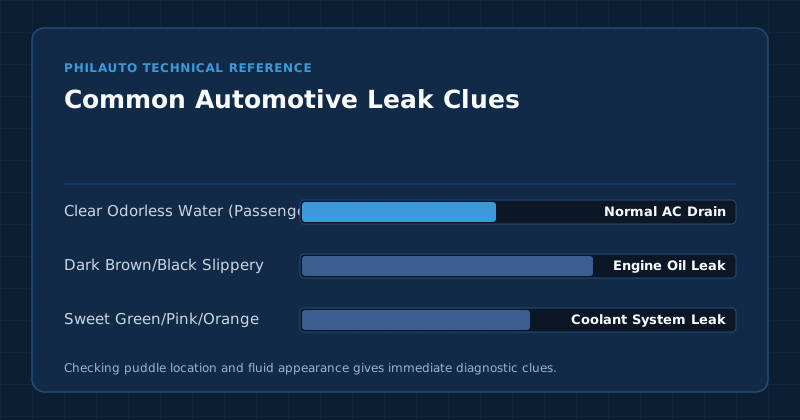
A rising temperature gauge, sweet maple-like odor outside the car, steam from the hood, or cabin heat suddenly blowing cold in winter point to low coolant, a stuck thermostat, a leaking radiator/hose, or a failing water pump.
8. Oil Leaks & Low Oil Consumption
Dark brown/black puddles beneath the engine bay, burning oil smell from oil dripping onto hot exhaust manifolds, or a low dipstick reading indicate aging valve cover gaskets, oil pan gaskets, or internal oil consumption.
9. Clogged Air Filter or Weak Fuel Delivery
Sluggish hill climbs, long cranking before starting, or stalling under heavy throttle often trace back to restricted air intake filters, weak fuel pumps, or fouled fuel injectors.
Brakes, Tires, Steering & Suspension Issues (#10–#13)
Chassis and rolling components affect stopping distance and directional control directly, making sensory clues vital.
10. Worn Brake Pads & Warped Brake Rotors
Steady high-pitched squealing announces thin pads; harsh grinding means metal-on-metal rotor damage; rhythmic pedal or steering pulsation during highway stops signals rotor thickness variation.
11. Uneven Tire Wear & Wheel Misalignment
If the steering wheel sits crooked while driving straight, the car pulls to one side, or one edge of a tire goes bald rapidly, wheel alignment angles or bent suspension links need correction.
12. Unbalanced Wheels & Worn Wheel Bearings
Steering-wheel vibration peaking around 55–70 mph points to wheel imbalance, while a steady roaring or growling sound that grows louder when swerving gently left or right suggests a failing wheel hub bearing.
13. Worn Shocks, Struts & Suspension Clunks
Excessive bouncing over railroad tracks, nose-diving under hard braking, cupped tire wear, or dull clunking over speed bumps indicate tired dampers, worn sway-bar end links, or loose ball joints.
Transmission & Climate Control Issues (#14–#15)
Catching drivetrain and HVAC trouble early keeps minor seal or fluid fixes from escalating into full assembly replacements.
14. Slipping or Harsh-Shifting Transmission
Engine RPM flaring up without matching acceleration, delayed engagement shifting from Park to Drive, harsh jolts, or dark burnt-smelling red fluid indicate overdue transmission service, low fluid, or solenoid wear.
15. Car AC Blowing Warm Air
Warm vents—especially while idling at stoplights—commonly stem from low refrigerant caused by a pinhole condenser or O-ring leak, a dead electric cooling fan, or a clogged cabin air filter.
| Symptom Observed | Urgency Level | Safe Immediate Action |
|---|---|---|
| Red oil or overheat gauge / flashing CEL | Stop Immediately | Pull over safely, shut off engine, arrange tow |
| Spongy brake pedal or metal grinding | Urgent Safety | Avoid highway driving; inspect/tow to shop promptly |
| Steady Check Engine Light (runs smooth) | Schedule Soon | Check gas cap; scan OBD-II code within days |
| Warm AC / mild tire vibration / wiper streak | Routine Repair | Schedule convenient service visit |
How to Decide When NOT to Drive
- Pull over and stop immediately if the temperature gauge enters the red zone, the red oil pressure lamp lights up, the brake pedal drops toward the floor, or the Check Engine Light flashes.
- If you smell raw gasoline or notice smoke coming from under the hood or dashboard, park away from structures, turn off the ignition, exit the vehicle, and call for assistance.
Frequently Asked Questions
Which car sounds should never be ignored?
Metallic brake grinding, loud rhythmic engine knocking, sudden roaring wheel-bearing hums, and sharp clunks when turning the steering wheel should all be inspected promptly because they involve core safety or engine components.
Can fluid color under my parked car help identify the leak?
Yes. Clear water is typically normal AC condensation; amber-to-black oil is engine oil; bright green, orange, pink, or blue sweet-smelling fluid is coolant; reddish oily fluid is automatic transmission or power steering fluid; and clear-to-yellowish slick fluid near a wheel can be dangerous brake fluid.
How do I describe a car problem effectively to a mechanic?
Note four specifics: what you hear/feel/smell, when it happens (cold start, hot idle, braking, highway speed), whether any warning light appeared, and whether recent work was done on the car.
Conclusion
Every vehicle eventually wears parts, but drivers who recognize early warning signs rarely face surprise roadside failures. Pairing attentive driving with scheduled inspections gives you control over safety and repair budgets.
Editorial Review & Archive History
Vehicle Diagnostics & Troubleshooting Desk · Originally published May 8, 2020 · Technical review completed August 19, 2026.
Originally published May 2020; reviewed in 2026 with updated electronic steering and TPMS fault checks.
Authoritative US Technical References: