Key Takeaways at a Glance
- Start With Your Owner’s Manual and Maintenance Schedule: Before relying on generic advice or window-sticker reminders from quick-lube chains, pull the owner’s manual out of your glove box (or download the PDF directly from the automaker’s US website using your Vehicle Identification Number).
- Five Simple Monthly Checks Any Driver Can Do: Set a recurring calendar reminder on the first Saturday of every month.
- Understanding Core Vehicle Fluids and Filters: Every gasoline or hybrid vehicle depends on six primary fluids—engine oil, engine coolant, brake fluid, transmission fluid, washer fluid, and (on some older models) hydraulic power steering fluid.
- Listening to Early Warning Signs Before Parts Fail: Cars almost always announce developing problems through sound, feel, or smell weeks before leaving you stranded.
Owning your first car—or taking charge of vehicle upkeep for the first time—can feel intimidating when every dashboard icon, fluid reservoir, and service sticker seems to speak another language. The good news is that modern automobiles are far more predictable than most drivers realize. You do not need to become a mechanic or buy a garage full of tools to keep a vehicle dependable past 150,000 miles.
Preventive maintenance comes down to two habits: paying attention to simple monthly inspections you can handle in five minutes at home, and following the mileage and time schedule printed in your vehicle’s owner’s manual. When small wear items like engine oil, air filters, wiper blades, and tires are maintained on time, expensive failures involving engines, transmissions, and braking hydraulics become far less likely.
This beginner’s guide walks through every core system under the hood and beneath your vehicle, explains which checks belong in your driveway versus a repair bay, and gives you a practical calendar you can follow year-round on American roads.
Start With Your Owner’s Manual and Maintenance Schedule
Before relying on generic advice or window-sticker reminders from quick-lube chains, pull the owner’s manual out of your glove box (or download the PDF directly from the automaker’s US website using your Vehicle Identification Number). Turn straight to the "Scheduled Maintenance" section.
You will notice two separate charts: Normal Service and Severe Service. Most US drivers assume they drive under "normal" conditions, yet automakers classify frequent trips under five miles, heavy urban stop-and-go traffic, freezing winter mornings, summer temperatures above 90°F, dusty roads, and towing as severe duty. Matching your actual daily commute to the right chart is the smartest step any beginner can take.
Why Time Matters as Much as Mileage
If you work remotely and drive only 4,000 miles per year, your car still ages every month. Motor oil accumulates condensation from short trips, brake fluid absorbs atmospheric moisture through microscopic hose pores, and rubber tires harden from UV exposure. Follow whichever arrives first: miles driven or months elapsed.

Five Simple Monthly Checks Any Driver Can Do
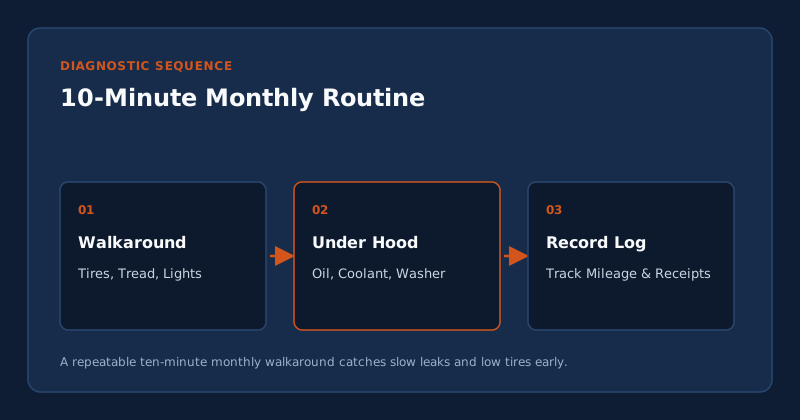
Set a recurring calendar reminder on the first Saturday of every month. Performing these five no-tool or minimal-tool inspections takes less than ten minutes and prevents the majority of avoidable roadside breakdowns.
- Tire Pressure (Cold PSI): Check all four tires and the spare with a digital or dial gauge before driving, matching the PSI printed on the driver’s door jamb sticker—never the maximum PSI molded on the tire sidewall.
- Engine Oil Level: Park on level ground, let the engine cool for ten minutes, wipe the dipstick clean, reinsert it fully, and confirm the oil sits between the MIN and MAX marks.
- Coolant & Windshield Washer Fluid: Glance at the translucent overflow tanks (never open a hot radiator cap) to confirm levels sit between Cold Min and Cold Max.
- Exterior Lights & Wipers: Walk around the car while checking headlights, turn signals, brake lights (use a garage wall reflection if alone), and inspect wiper rubber for tearing.
- Look Under the Car: Note any fresh drips on your parking spot—clear water on humid days is normal AC condensation, whereas dark oil, sweet-smelling coolant, or reddish transmission fluid warrants inspection.
Understanding Core Vehicle Fluids and Filters
Every gasoline or hybrid vehicle depends on six primary fluids—engine oil, engine coolant, brake fluid, transmission fluid, washer fluid, and (on some older models) hydraulic power steering fluid. Each fluid breaks down over time from heat, pressure, and contamination.
Alongside fluids, two inexpensive paper filters protect your engine and your lungs. The engine air filter stops road grit from scouring cylinder walls and usually lasts 15,000 to 30,000 miles. The cabin air filter—usually tucked right behind the glove box—traps pollen, brake dust, and wildfire smoke and is best changed every 12,000 to 15,000 miles.
| Interval | Key Tasks to Complete | DIY or Shop |
|---|---|---|
| Monthly | Cold tire PSI, oil dipstick check, washer fluid, exterior lights | Easy DIY |
| Every 5,000–7,500 mi | Oil & filter change, tire rotation, visual brake pad check | DIY or Shop |
| Every 15,000–30,000 mi | Engine & cabin air filters, battery load test, wiper blades | Filters DIY / Test Shop |
| Every 2–3 Years | Brake fluid flush (moisture removal), alignment check if uneven wear | Recommended Shop |
| Every 60,000–100,000 mi | Transmission fluid, coolant flush, spark plugs, serpentine belt | Recommended Shop |
Listening to Early Warning Signs Before Parts Fail
Cars almost always announce developing problems through sound, feel, or smell weeks before leaving you stranded. A steady high-pitched squeal while braking means pad wear tabs are alerting you early; waiting until it turns into a harsh grind damages brake rotors.
Similarly, a slightly sluggish engine crank on a cool morning signals a weakening 12-volt battery, while a new rhythmic hum that changes pitch with vehicle speed points toward tire wear or a worn wheel bearing. Addressing early symptoms keeps repair invoices predictable.
Keeping Organized Maintenance Records
Keep a dedicated folder in your glove box or scan receipts into a cloud folder sorted by date and odometer reading. Documented oil changes, fluid flushes, and tire rotations protect your factory warranty under federal US law (the Magnuson-Moss Warranty Act) and add measurable resale value when you eventually sell or trade in the vehicle.
Essential Beginner Maintenance Safety Rules
- Never remove a radiator cap or pressurized coolant reservoir cap while the engine is warm—boiling coolant can erupt and cause severe burns.
- Never crawl beneath a car lifted only by the trunk emergency jack or a hydraulic floor jack; certified jack stands on flat concrete are mandatory.
- Keep jewelry, sleeves, and long hair clear of serpentine belts and electric cooling fans, which can switch on automatically even after the engine shuts off.
Frequently Asked Questions
How much should a beginner budget per year for routine car maintenance?
For a typical US compact sedan or crossover driven 12,000 miles annually, routine oil changes, tire rotations, filters, and wipers often cost $300–$600 per year, plus setting aside $50–$100 monthly for periodic larger items like tires, brake pads, batteries, and 60,000-mile fluid services.
Do I have to go to a brand dealership for scheduled maintenance?
No. Reputable independent repair shops can perform factory-scheduled maintenance using OEM-spec fluids and parts without voiding your new-car warranty. Just retain itemized receipts showing date, mileage, and fluid specifications.
What tools are genuinely helpful for a beginner driver to keep in the trunk?
A reliable digital tire pressure gauge, a portable 12-volt air inflator, a compact lithium jump-starter pack, work gloves, a bright LED flashlight, and a basic tire tread depth gauge cover nearly all everyday checks and minor roadside situations.
Conclusion
Great car care is not about memorizing mechanical engineering textbooks—it is about consistency. Checking tire pressure monthly, changing motor oil on schedule, respecting dashboard warning lights, and replacing fluids before they break down turns an unpredictable machine into reliable daily transportation.
Start by reading your owner’s manual schedule tonight and setting a monthly ten-minute reminder. Those small habits compound into thousands of dollars saved and years of trouble-free driving.
Editorial Review & Archive History
PhilAuto Maintenance & Ownership Desk · Originally published February 14, 2020 · Technical review completed October 18, 2026.
Originally published February 2020; expanded in 2026 for modern direct-injection and hybrid maintenance intervals.
Authoritative US Technical References: