What General Car Maintenance Covers
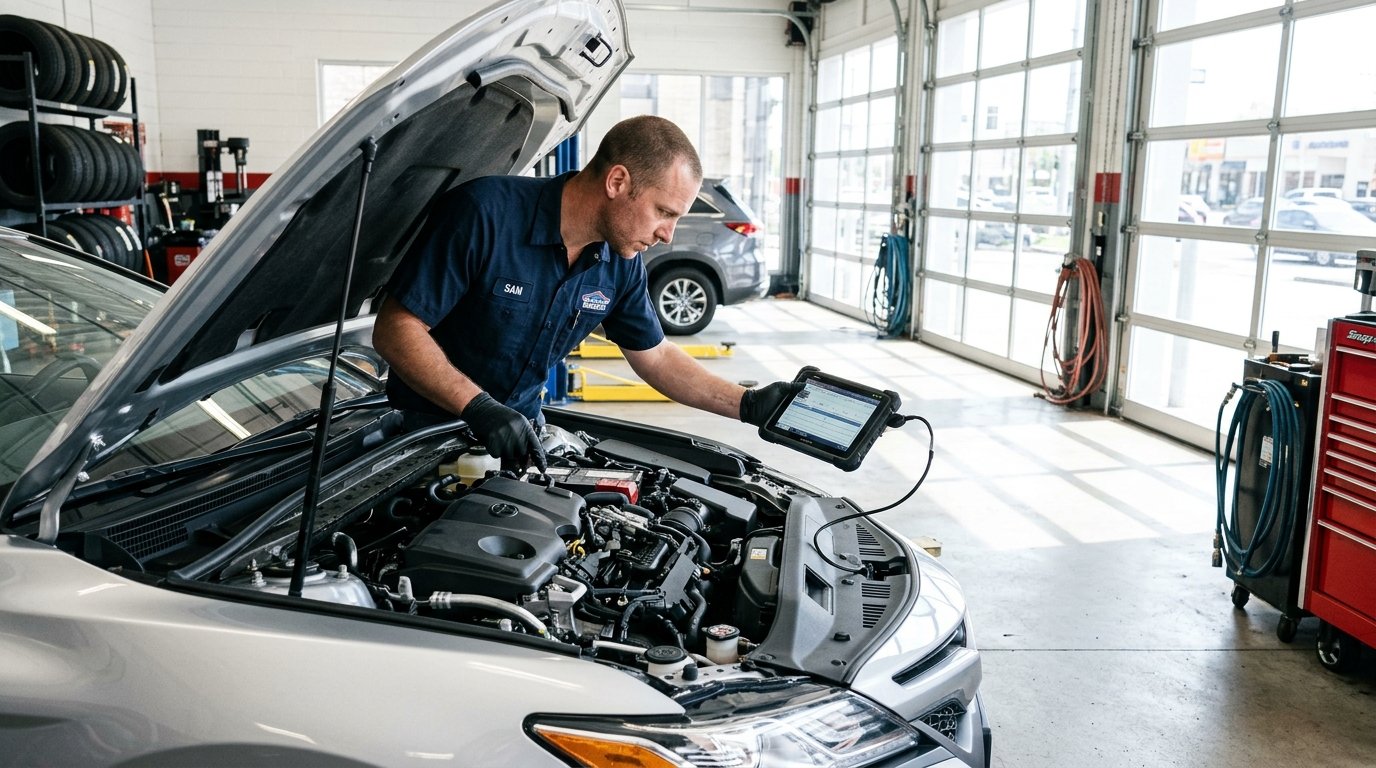
General car maintenance is the foundation of reliable, economical vehicle ownership in the United States. Rather than waiting for a dashboard warning light, strange noise, or roadside breakdown, preventive maintenance replaces consumable fluids and wear items on a predictable schedule dictated by your vehicle manufacturer.
Modern cars, trucks, and crossovers are engineered to exceed 150,000 to 200,000 miles when serviced consistently, yet neglect of seemingly minor items—such as dirty air filters, aging serpentine belts, degraded coolant, or overdue transmission fluid—accelerates internal wear across major assemblies. This service guide explains what comprehensive preventive maintenance includes, how technicians evaluate wear items, and what questions to ask when scheduling routine care.
PhilAuto presents this resource as an independent informational and inquiry guide. Always cross-check factory mileage intervals in your owner’s manual, especially if your driving falls under the manufacturer’s "severe service" definition (frequent trips under 5 miles, stop-and-go city traffic, towing, dusty rural roads, or extreme winter cold and desert heat).
Common Problems Addressed
Premature Engine Sludge and Accelerated Wear
Extending engine oil and filter intervals past manufacturer limits allows thermal breakdown, moisture condensation, and varnish buildup inside oil galleries, timing chain tensioners, and variable valve timing solenoids.
Cracked Belts, Swollen Coolant Hoses, and Fluid Leaks
Rubber serpentine belts and radiator hoses harden from years of under-hood heat cycles. Without periodic visual inspection, a split hose or snapped belt can cause immediate overheating or loss of charging.
Restricted Airflow and Declining Fuel Economy
Clogged engine air filters, dirty throttle bodies, and worn spark plugs force the engine control module to compensate, reducing highway mileage and dulling throttle response.
Hidden Undercarriage Corrosion and Worn Bushings
In US snow-belt states using road salt, brake lines, exhaust hangers, sway bar links, and suspension ball joints corrode out of sight until inspected on a lift.

Standard Service Process
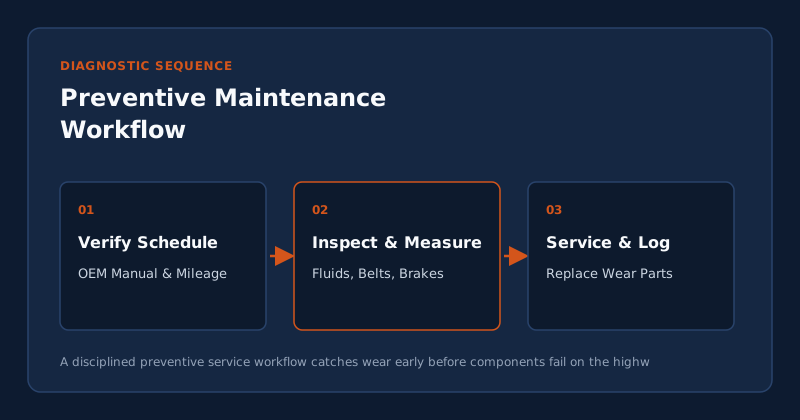
Step 01: Maintenance History & Factory Schedule Review
Review current odometer mileage, time elapsed since previous services, and manufacturer 15k/30k/60k/90k/100k recommendations along with open NHTSA safety recalls.
Step 02: Under-Hood Fluid & Filter Evaluation
Check level and condition of engine oil, coolant, brake fluid (moisture test), power steering fluid (if hydraulic), windshield washer fluid, and inspect engine and cabin air filters.
Step 03: Belt, Hose, Battery & Charging Inspection
Inspect serpentine belt ribs for glazing or cracking, squeeze radiator and heater hoses for soft spots, check battery terminals for corrosion, and verify resting and charging voltages.
Step 04: Undercarriage, Tire & Brake Safety Walkaround
Measure brake pad thickness in millimeters, check tire tread depth in 32nds of an inch, verify cold tire PSI including the spare, and inspect CV boots, shocks, struts, and exhaust mounts.
Step 05: Preventive Replacements, Service Reset & Documentation
Perform approved fluid exchanges and filter replacements using OEM-spec parts, torque drain plugs and lug nuts properly, reset the maintenance reminder, and record dated receipts for warranty and resale value.
| System / Component | Typical Normal Interval | Severe-Duty Consideration |
|---|---|---|
| Engine Oil & Filter (Synthetic) | 5,000–10,000 miles / 12 months | 5,000 miles / 6 months for short trips or towing |
| Tire Rotation & Pressure Check | Every 5,000–7,500 miles | Check PSI monthly regardless of mileage |
| Engine & Cabin Air Filters | 15,000–30,000 miles | Inspect every 10,000 miles in dusty or smoky regions |
| Brake Fluid Exchange | Every 2–3 years | Moisture degrades boiling point regardless of low miles |
| Transmission Fluid Service | 30,000–60,000 miles | Avoid "lifetime fluid" assumptions under heavy towing |
| Coolant & Spark Plugs | 60,000–100,000 miles | Direct-injection turbo plugs often due at 40k–60k miles |
Benefits
- Extends engine, transmission, and drivetrain longevity by preventing friction and corrosion damage.
- Preserves factory and extended powertrain warranty eligibility through documented maintenance records.
- Identifies worn tires, thin brake pads, or weak batteries weeks before they cause an unsafe failure.
- Supports consistent fuel economy and lower tailpipe emissions over the life of the vehicle.
- Increases private-party and trade-in resale value with clean, chronological service history.
When to Seek Professional Assistance
- Your vehicle is approaching a major factory milestone (30,000, 60,000, 90,000, or 100,000 miles) requiring transmission, differential, coolant, or timing belt service.
- You notice new fluid spots under your parked car (amber/brown oil, green/pink/orange coolant, red transmission fluid, or clear/amber brake fluid).
- Dashboard service reminders illuminate alongside rough idling, delayed shifting, or reduced braking feel.
- You recently purchased a used vehicle without complete maintenance documentation and need a baseline fluid and safety reset.
Important Safety Information
- Allow the engine to cool completely before inspecting coolant levels, belts, or hoses to avoid severe burns or entanglement hazards.
- Never inspect under a raised vehicle supported only by a jack; certified jack stands or a properly locked two-post shop lift are mandatory.
- Dispose of used motor oil, antifreeze, filters, and batteries at authorized US auto parts recyclers or municipal household hazardous waste facilities—never into storm drains.
Frequently Asked Questions
Does having routine maintenance performed outside the dealership void my US new-car warranty?
No. Under the federal Magnuson-Moss Warranty Act, manufacturers cannot void your warranty simply because routine maintenance was performed by an independent repair shop or by yourself, provided OEM-spec fluids and parts were used and you retain dated receipts and mileage logs.
What qualifies as "severe driving conditions" in an owner’s manual?
Most US commuters unknowingly fall into severe service: frequent trips under 5–10 miles where the engine never fully warms up, heavy stop-and-go city idling, temperatures below freezing or above 90°F, mountainous driving, dusty roads, or towing.
Are time intervals important if I drive fewer than 5,000 miles per year?
Yes. Engine oil accumulates condensation and acidic byproducts during short trips, brake fluid absorbs atmospheric moisture, and tires oxidize with age even when parked. Follow whichever comes first: mileage or months.