What Brake Inspection Covers
Your vehicle’s braking system is its most important active safety system. Unlike engine wear that develops quietly with minimal immediate danger, neglected brakes directly increase stopping distances and can fail abruptly during an emergency stop or steep downhill descent.
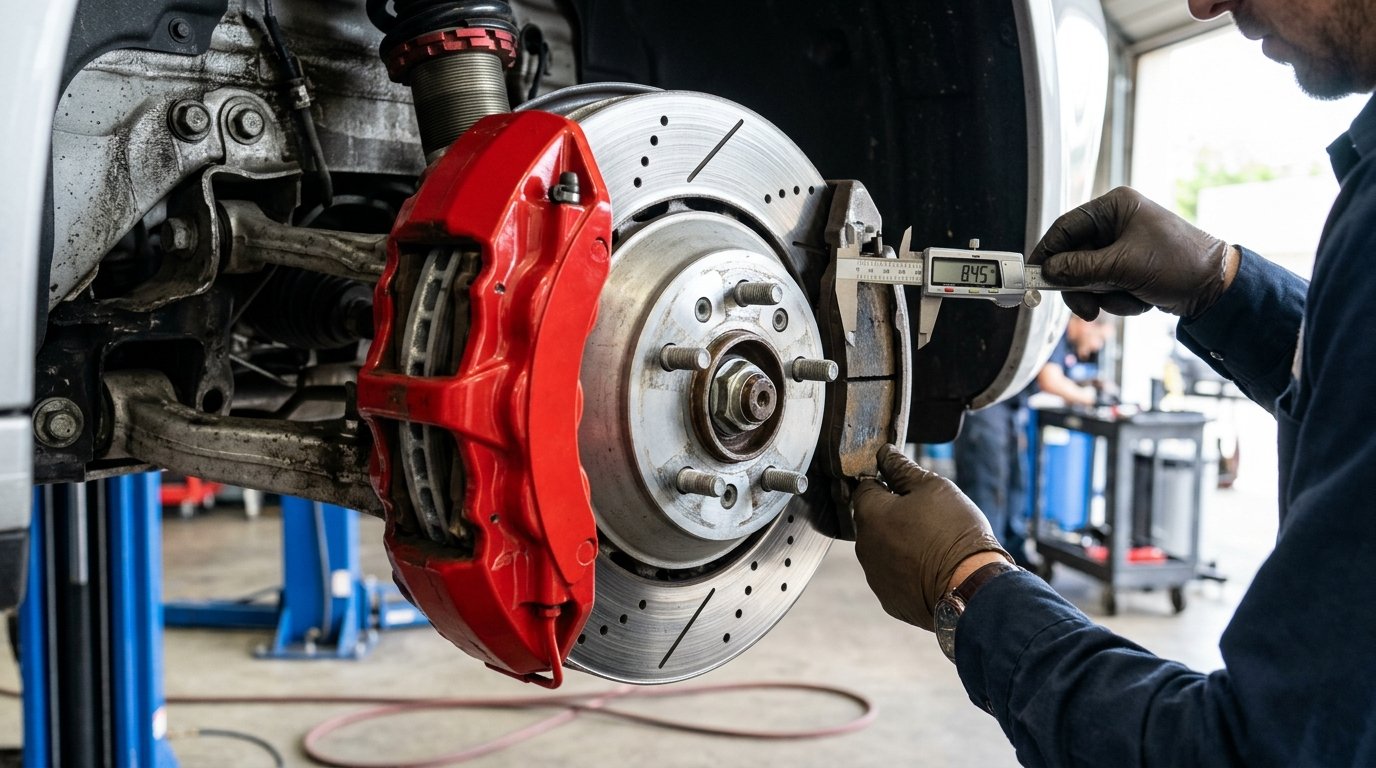
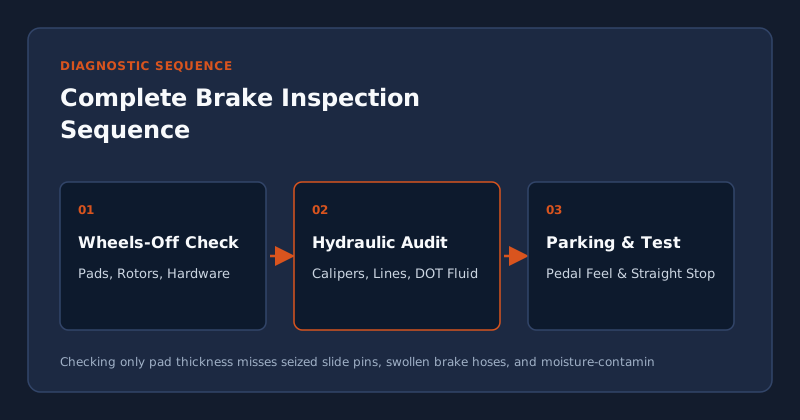
A proper wheels-off brake inspection goes far beyond glancing through alloy wheel spokes. Because inner brake pads often wear faster than outer pads—especially when caliper slide pins corrode or dry out—technicians remove the wheels to measure inner and outer friction thickness accurately, micrometer-measure rotor thickness against minimum discard specifications stamped on the rotor hat, inspect rubber brake hoses for cracking or bulging, and test hydraulic brake fluid for moisture contamination.
Whether you drive in heavy urban stop-and-go traffic, haul cargo, or commute along mountain grades, routine brake inspections at every tire rotation (every 5,000 to 7,500 miles) keep braking predictable and prevent worn pads from scoring expensive rotors.
Common Problems Addressed
Worn Brake Pads & Metal-on-Metal Grinding
When friction material wears down below 3 mm, built-in acoustic wear tabs emit a steady high-pitched squeal. Ignoring the squeal allows the steel backing plate to gouge the cast-iron rotor, turning a simple pad job into full rotor replacement.
Steering Wheel Vibration or Pedal Pulsation While Braking
Lateral rotor thickness variation (often called "warped rotors") from uneven pad deposits, over-torqued lug nuts, or hub rust causes rhythmic pulsing through the brake pedal and steering wheel during highway deceleration.
Seized Caliper Slide Pins & Uneven Pad Wear
Road salt and degraded rubber boots allow caliper guide pins to stick, forcing one pad to drag constantly against the rotor—causing pulling to one side, burnt odor, overheating, and rapid fuel economy loss.
Spongy Brake Pedal & Moisture-Contaminated Brake Fluid
DOT 3 and DOT 4 brake fluids are hygroscopic, meaning they gradually absorb water vapor over time. Water lowers the fluid’s boiling point (risking vapor lock on long grades) and corrodes internal ABS valves and steel brake lines.

Standard Service Process
Step 01: Pedal Feel & Parking Brake Evaluation
Check brake pedal height, firmness, ABS warning light status, and parking brake holding strength (mechanical cable or electronic parking brake actuator).
Step 02: Brake Fluid Level, Color & Moisture Test
Inspect the master cylinder reservoir level (low fluid often indicates worn pads or a leak) and test fluid moisture percentage or copper corrosion content.
Step 03: Wheels-Off Pad & Rotor Micrometer Inspection
Measure inner and outer pad thickness at all four corners, inspect rear drum shoes if equipped, and check rotors for scoring, heat spots, rust ridges, and minimum thickness specs.
Step 04: Calipers, Slide Pins, Brake Hoses & Steel Lines
Verify caliper pistons retract smoothly without weeping fluid, check rubber flex hoses for dry rot or swelling, and trace underbody steel lines for rust.
Step 05: Written Measurement Report & Safety Recommendations
Receive clear millimeter measurements for front and rear pads and prioritize immediate safety items separately from upcoming maintenance.
| Component | Inspection Frequency | Typical Replacement Range |
|---|---|---|
| Front Brake Pads | Every 5,000–7,500 miles | 30,000–60,000 miles (varies heavily by city vs. highway) |
| Rear Brake Pads / Shoes | Every 5,000–7,500 miles | 40,000–75,000 miles (longer on EVs with regen braking) |
| Brake Rotors | Every pad replacement | Replace or machine if below min spec or showing pulsation |
| DOT 3 / DOT 4 Brake Fluid | Inspect annually | Flush every 2–3 years or when moisture exceeds ~3% |
Benefits
- Preserves short, straight, predictable stopping distances in dry, wet, and winter conditions.
- Catches worn brake pads before metal-on-metal grinding damages rotors or calipers.
- Prevents costly ABS hydraulic module corrosion through timely brake fluid exchanges.
- Eliminates annoying squealing, pulling, and highway braking vibrations.
When to Seek Professional Assistance
- You hear metal-on-metal grinding, scraping, or persistent squealing every time you press the brake pedal.
- The brake pedal feels unusually soft, spongy, sinks toward the floor, or requires pumping to build pressure.
- The red BRAKE warning light or amber ABS light illuminates on the instrument cluster.
- The vehicle pulls sharply to the left or right when braking, or you smell sharp burning friction odor near a wheel.
Important Safety Information
- Never drive a vehicle with a sinking brake pedal, active hydraulic fluid leak, or illuminated red BRAKE warning light (with the parking brake fully released)—arrange a tow instead.
- Always use the exact brake fluid classification specified on the reservoir cap (DOT 3, DOT 4, or DOT 5.1) from a freshly sealed container; never mix silicone DOT 5 with glycol-based DOT 3/4 fluids.
- After new brake pads and rotors are installed, follow moderate break-in ("bedding-in") stops and avoid emergency panic stops for the first 200 miles whenever possible.
Frequently Asked Questions
Should brake rotors always be replaced when replacing brake pads?
Not always, though many modern rotors are engineered thinner for weight savings and leave little room for machining. If rotors are grooved, rusted along the friction surface, pulsing, or near minimum thickness specification, replacing pads and rotors together ensures quiet, even braking.
Why do electric and hybrid vehicles still need brake inspections if regenerative braking saves pads?
Because friction brakes are used less frequently on EVs and hybrids, brake rotors can accumulate surface rust and caliper slide pins can seize from lack of movement—especially in wet or salted winter climates. Annual brake cleaning and lubrication is essential.
Does low brake fluid mean I should just top off the reservoir?
Only after inspecting the pads and hydraulic lines. As brake pads wear thinner, caliper pistons extend further out and the reservoir level drops naturally. Topping off without checking pads can hide worn brakes and cause overflow during the next brake job—or mask a dangerous fluid leak.