Key Takeaways at a Glance
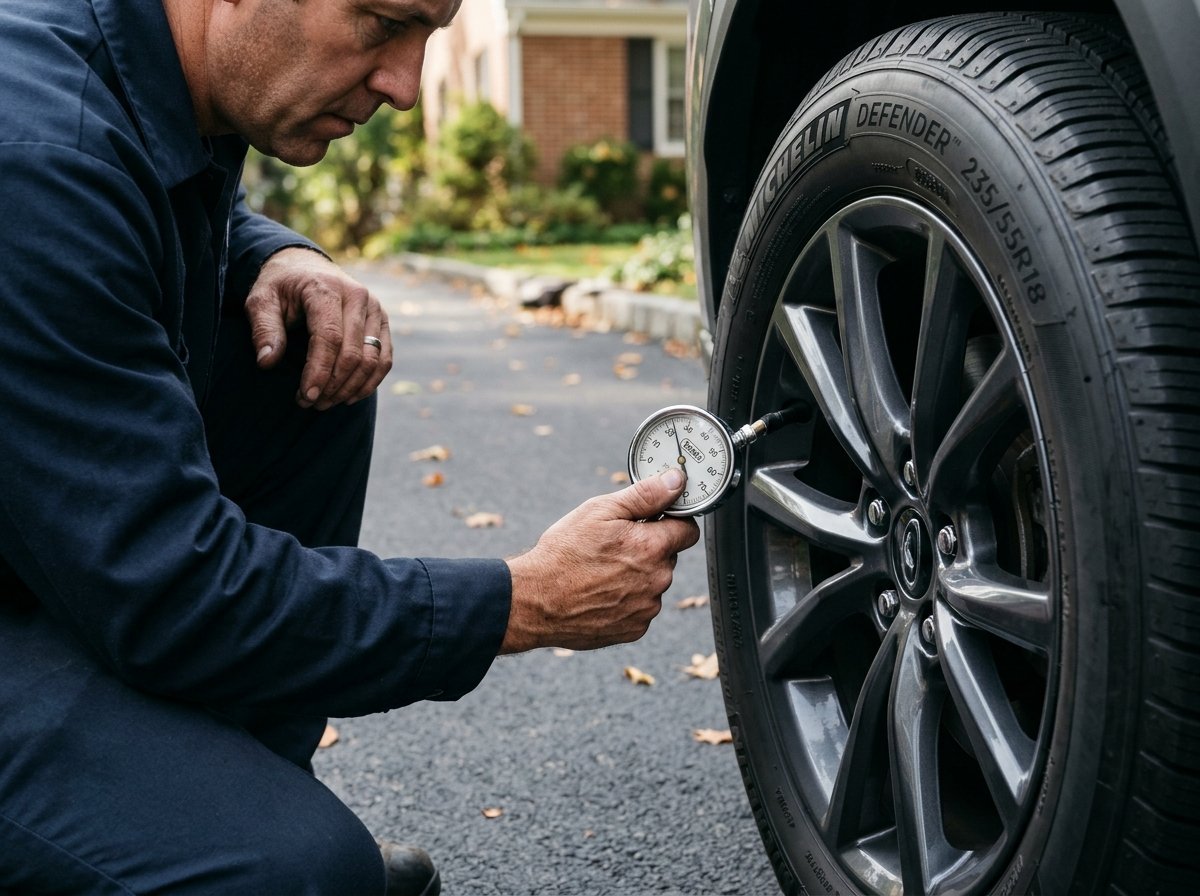
- 1. Monthly Cold Tire Pressure Maintenance: Proper inflation keeps the entire width of the tread flat against the road.
- 2. Measuring Tread Depth and Reading Wear Patterns: New all-season tires start around 10/32 to 11/32 of an inch of tread depth.
- 3. Tire Rotation Schedules and Patterns: Front tires on most vehicles handle steering, the majority of braking force, and—on front-wheel-drive cars—propulsion torque.
- 4. Wheel Balancing, Alignment, and DOT Tire Age: Wheel balancing adds tiny counterweights to the rim so the assembly spins smoothly without shaking the steering wheel at highway speeds.
A quality set of tires for a modern US crossover or pickup truck easily costs $700 to $1,400 installed. Yet tires are frequently neglected until a TPMS warning flashes on a cold morning or a technician points out steel cords peeking through an inner shoulder.
Good tire maintenance protects both your safety and your wallet. By combining monthly pressure checks, regular rotations, quick tread-depth checks, and timely wheel alignments, you preserve crisp braking traction, avoid blowouts, and squeeze every safe mile out of your rubber.
1. Monthly Cold Tire Pressure Maintenance
Proper inflation keeps the entire width of the tread flat against the road. Check pressure monthly when the car has been parked for at least three hours (or driven less than one mile), matching the front and rear cold PSI printed on the Tire and Loading Information label inside the driver’s door jamb. Remember to check your spare tire twice a year—compact temporary spares typically require 60 PSI.
2. Measuring Tread Depth and Reading Wear Patterns
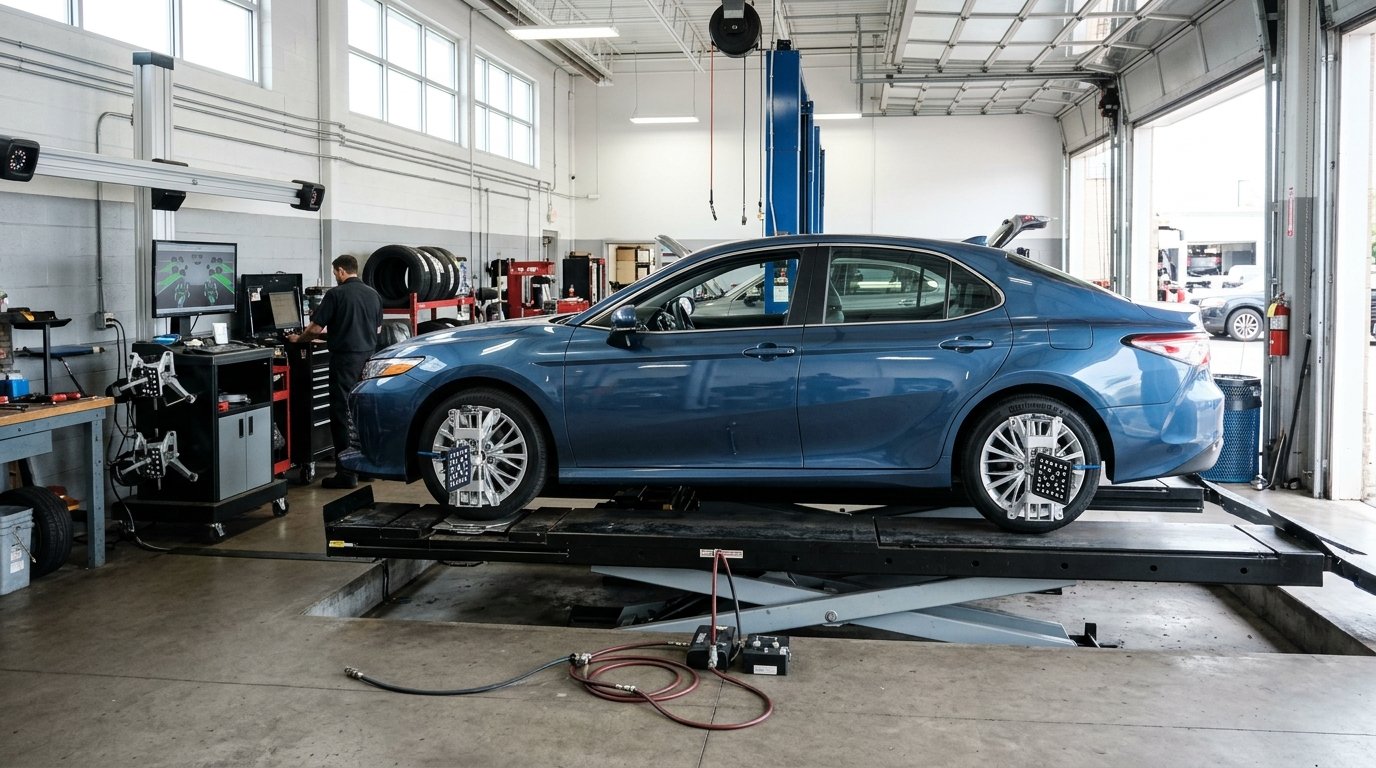
New all-season tires start around 10/32 to 11/32 of an inch of tread depth. Built-in rubber "wear bars" molded across the main grooves sit at 2/32 inch—the legal minimum in most US states. For safe wet-road braking and hydroplaning resistance, begin shopping for replacements at 4/32 inch (or 5/32 inch if you drive in snow).
- The Quarter Test (4/32"): Insert a US quarter head-down into a main groove; if the top of Washington’s head is covered by tread, you have at least 4/32 inch remaining.
- The Penny Test (2/32"): Insert a penny head-down; if all of Lincoln’s head is fully visible, the tire is legally worn out and unsafe in rain.
- Measure across inner, center, and outer grooves on all four tires—alignment faults often wear only the inner edge out of view.
3. Tire Rotation Schedules and Patterns
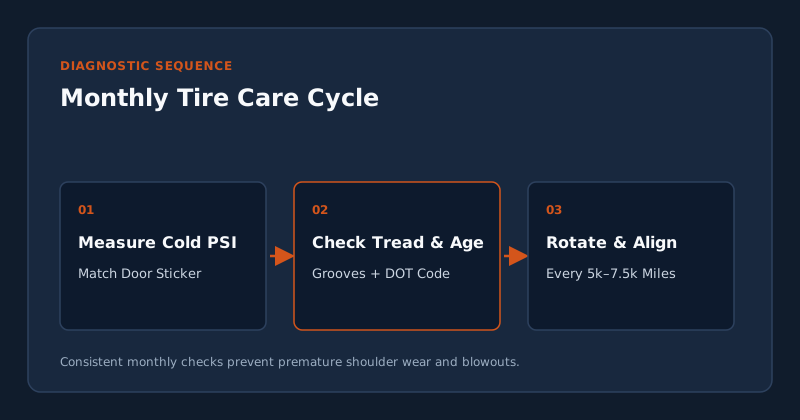
Front tires on most vehicles handle steering, the majority of braking force, and—on front-wheel-drive cars—propulsion torque. Rotating tires every 5,000 to 7,500 miles (conveniently paired with every oil change) equalizes tread wear across all four corners.
| Vehicle / Tire Setup | Standard Rotation Pattern | Interval |
|---|---|---|
| Front-Wheel Drive (Non-Directional) | Fronts straight back; rears cross to front | 5,000–7,500 miles |
| Rear / All-Wheel Drive (Non-Directional) | Rears straight forward; fronts cross to rear | 5,000–7,500 miles |
| Directional Tread Tires (Arrow on Sidewall) | Front-to-back on same side only | 5,000–7,500 miles |
| Staggered Sizes (Wider Rear Tires) | Side-to-side (if non-directional) or no rotation | Inspect wear every 5k mi |
4. Wheel Balancing, Alignment, and DOT Tire Age
Wheel balancing adds tiny counterweights to the rim so the assembly spins smoothly without shaking the steering wheel at highway speeds. Wheel alignment adjusts suspension camber, caster, and toe angles so all four wheels track straight without scrubbing rubber.
Finally, inspect the 4-digit DOT manufacturing date stamped on the sidewall (for instance, "2422" means the 24th week of 2022). Rubber compounds harden and crack with oxygen and UV exposure regardless of miles driven; most automakers advise annual professional inspection after 6 years and mandatory replacement by 10 years.
Critical Tire Safety Rules
- Immediately replace any tire showing a sidewall bulge, exposed fabric/steel cords, or deep dry-rot cracks—these indicate structural failure that can blow out without warning.
- Never exceed the speed rating or load index listed on your vehicle’s door jamb placard when replacing tires.
- Re-torque lug nuts after 50–100 miles whenever alloy wheels are removed and reinstalled.
Frequently Asked Questions
Is nitrogen tire inflation worth paying extra for?
Dry nitrogen leaks slightly slower through rubber than regular compressed air (which is already 78% nitrogen) and reduces minor pressure swings, but it does not eliminate the need to check tire pressure monthly. Regular compressed air checked monthly works perfectly for everyday driving.
Why does my car need an alignment after hitting a big pothole?
A sharp pothole impact can bend a tie rod or shift suspension camber/toe out of spec by a fraction of a degree—enough to wear out a new tire in under 5,000 miles even if you barely feel a pull.
Can a tire with a nail in it always be patched?
Only if the puncture is 1/4 inch or smaller, located cleanly within the central tread crown (not the outer shoulder or sidewall), and the tire was not driven flat. Proper repair requires dismounting the tire for an internal patch-plug.
Conclusion
Ten minutes a month with a pressure gauge and consistent 5,000- to 7,500-mile rotations protect your braking grip, fuel economy, and tire investment for years.
Editorial Review & Archive History
Tire, Brake & Chassis Review Group · Originally published January 18, 2021 · Technical review completed August 25, 2026.
Originally published January 2021; reviewed against current USTMA rotation and 2/32-inch tread guidelines.
Authoritative US Technical References: