
Key Takeaways at a Glance
- Mistakes #1–#5: Fluids, Engine & Under-Hood Oversights: The most expensive mechanical repairs almost always start with neglected or mismatched fluids:.
- Mistakes #6–#10: Tires, Brakes, Batteries & Shop Habits: Chassis and everyday ownership habits create equally costly consequences when overlooked:.
Most premature engine, transmission, tire, and brake failures do not stem from manufacturing defects—they trace back to well-intentioned but mistaken maintenance habits passed down by word of mouth or marketing myths. Even diligent drivers who never miss an oil change routinely fall into avoidable traps that shorten vehicle life by tens of thousands of miles.
Steering clear of these ten widespread automotive maintenance mistakes protects your safety, preserves warranties, and saves thousands of dollars over the life of every car you own.
Mistakes #1–#5: Fluids, Engine & Under-Hood Oversights
The most expensive mechanical repairs almost always start with neglected or mismatched fluids:
1. Never Checking the Oil Dipstick Between Oil Changes
Many modern low-friction engines consume 1 quart of oil every 2,000–4,000 miles as normal operation. Drivers who wait for a 10,000-mile oil-life light without ever pulling the dipstick can run 2–3 quarts low—causing severe timing chain and bearing wear before any oil-pressure warning ever illuminates.
2. Believing "Lifetime" Transmission Fluid Needs Zero Service
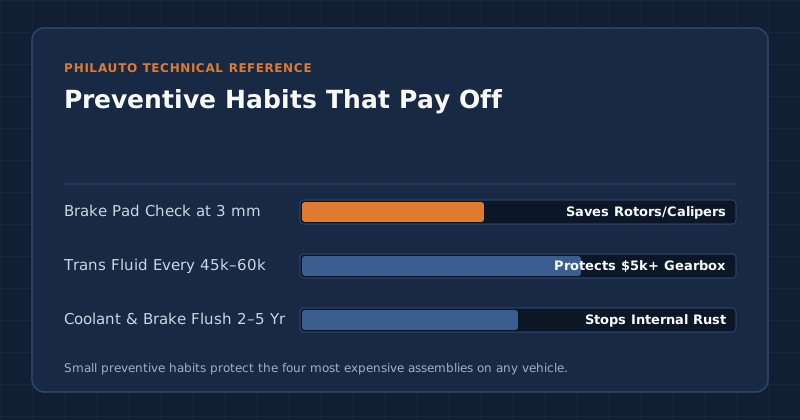
No automotive lubricant lasts forever under 200°F shear stress. Performing gentle OEM drain-and-fill transmission services every 30,000–60,000 miles prevents costly transmission failures past 100,000 miles.
3. Ignoring Time-Based Brake Fluid and Coolant Flushes
Brake fluid absorbs water through microscopic hose pores every year regardless of low mileage, rusting ABS valves internally and lowering boiling point. Coolant corrosion inhibitors similarly deplete over 5 years, eating aluminum radiators and heater cores from the inside.
4. Mixing Wrong Fluids or Pouring Chemical "Stop-Leak" Additives
Pouring incompatible antifreeze colors together forms radiator-clogging gel, using wrong ATF causes transmission shudder, and pouring retail radiator or AC stop-leak sealants frequently gums up heater cores, thermostats, and expansion valves permanently.
5. Continuing to Drive With a Flashing Check Engine Light or Overheating Gauge
Driving "just ten more miles home" while overheating warps aluminum cylinder heads; driving with a flashing Check Engine Light melts catalytic converters. A $100 tow always beats a $4,000 engine repair.

Mistakes #6–#10: Tires, Brakes, Batteries & Shop Habits
Chassis and everyday ownership habits create equally costly consequences when overlooked:
6. Inflating Tires to the Sidewall "MAX PRESS" Number
Inflating tires to 44–51 PSI stamped on the sidewall instead of the 32–36 PSI printed on the driver’s door jamb produces a harsh ride, reduced wet-road grip, and rapid center tread wear.
7. Skipping Tire Rotations & Driving Until Tread Is Bald
Skipping 5,000- to 7,500-mile rotations can halve front tire lifespan on front-wheel-drive crossovers—and driving below 4/32 inch tread dramatically raises wet hydroplaning crash risk.
8. Ignoring Squealing Brakes Until They Grind Metal-on-Metal
Replacing pads promptly when the 3 mm wear tab begins squealing keeps brake jobs straightforward; waiting until grinding ruins rotors and overheats calipers.
9. Replacing Parts Directly From a Free OBD-II Code Printout
Swapping an oxygen sensor or catalytic converter blindly based on a parts-store code name without checking vacuum leaks, fuel trims, or live sensor data wastes hundreds of dollars while leaving the true fault unfixed.
10. Throwing Away Maintenance Receipts & Ignoring Open Recalls
Missing service receipts complicate powertrain warranty claims and reduce resale value, while failing to check NHTSA.gov/recalls leaves free, manufacturer-funded safety repairs undone.
| Common Expensive Mistake | Smart Low-Cost Habit |
|---|---|
| Never checking oil between 10k-mi services | Check oil dipstick once a month on level ground |
| Inflating to tire sidewall MAX PSI | Inflate cold monthly to driver door-jamb placard PSI |
| Using AC or radiator stop-leak bottles | Pressure-test and repair the actual hose/seal leak |
| Ignoring 3-year-old battery until dead | Conductance load-test battery every fall & spring |
| Guessing parts from OBD-II code titles | Verify live data & root cause before buying parts |
Final Safety Reminder for Every Driver
- Never defer safety-critical items—brakes, bald tires, loose steering joints, burned-out brake lights, or red dashboard warnings—to save money short-term.
- When in doubt about any specification, fluid grade, or maintenance interval, your vehicle’s official owner’s manual is always the highest authority.
Frequently Asked Questions
Does washing my engine bay with a high-pressure washer hurt modern cars?
Blasting high-pressure water directly at modern ignition coils, alternators, fuse boxes, and sensor connectors frequently forces water past weather seals and causes misfires or electrical shorts. Gentle low-pressure wiping with a damp cloth and mild degreaser is much safer.
Is warming up a modern car for 15 minutes every winter morning actually a mistake?
Yes—excessive cold idling wastes fuel, increases condensation and fuel dilution in engine oil, and slows drivetrain warmup. Idling 30–60 seconds and then driving gently for the first few miles is far healthier for modern engines.
How often should I review my maintenance folder?
Review your maintenance log and owner’s manual schedule every 6 months (spring and fall) so upcoming 30k, 60k, or 90k services never catch your budget by surprise.
Conclusion
Avoiding these ten common car maintenance mistakes requires no mechanical training—just monthly awareness, respect for factory specifications, and timely preventive care. Your vehicle will reward you with safer, quieter, and far more economical miles.
Editorial Review & Archive History
PhilAuto Maintenance & Ownership Desk · Originally published September 15, 2025 · Technical review completed October 25, 2026.
Originally published September 2025; updated for 2026 repair cost trends and deferred fluid service risks.
Authoritative US Technical References: